

One of the most common concerns before hair transplant surgery is whether the procedure will be painful. For many patients, the anxiety is not only about the transplant itself but also about the anesthesia injections and what they might feel throughout the treatment.
Hair transplant anesthesia is usually local anesthesia. This means that specific areas of the scalp are numbed while the patient remains awake and able to communicate with the medical team.
Local anesthesia helps block pain during follicular extraction and implantation. However, patients may still experience sensations such as pressure, touch, or movement.
At Laser Way Clinic, where hair transplantation is performed using DHI and Sapphire FUE techniques, anesthesia is an important part of preparing patients for the procedure.
In this guide, we explain how local anesthesia works, what patients may feel, how long its effects last, and what you should know about safety and recovery.
What Type of Anesthesia Is Used for Hair Transplants?
Most modern hair transplant procedures are performed under local anesthesia.
Unlike general anesthesia, which causes unconsciousness, local anesthesia temporarily reduces or blocks pain sensations in a specific area of the body.
During a hair transplant, anesthesia is generally administered to two main areas:
- The donor area: Usually the back and sides of the scalp, where hair follicles are extracted.
- The recipient area: The area where extracted follicles will be implanted to restore hair coverage.
Both areas need appropriate pain control during the relevant stages of surgery.
The patient usually remains conscious and can communicate with the medical team throughout the procedure.
How Does Local Anesthesia Work During a Hair Transplant?
Local anesthetic medications temporarily block nerve signals responsible for transmitting pain from the treated area.
After the medication is administered, the medical team allows time for it to take effect and checks whether the scalp is sufficiently numb before proceeding.
The process generally involves several steps.
1. Medical Assessment Before Anesthesia
Before surgery, the medical team reviews the patient’s medical history, medications, known allergies, and any previous reactions to anesthetic drugs.
This assessment helps identify factors that may affect anesthesia planning and patient safety.
Patients should disclose relevant health conditions and medications rather than assuming that they are unrelated to hair transplantation.
2. Numbing the Donor Area
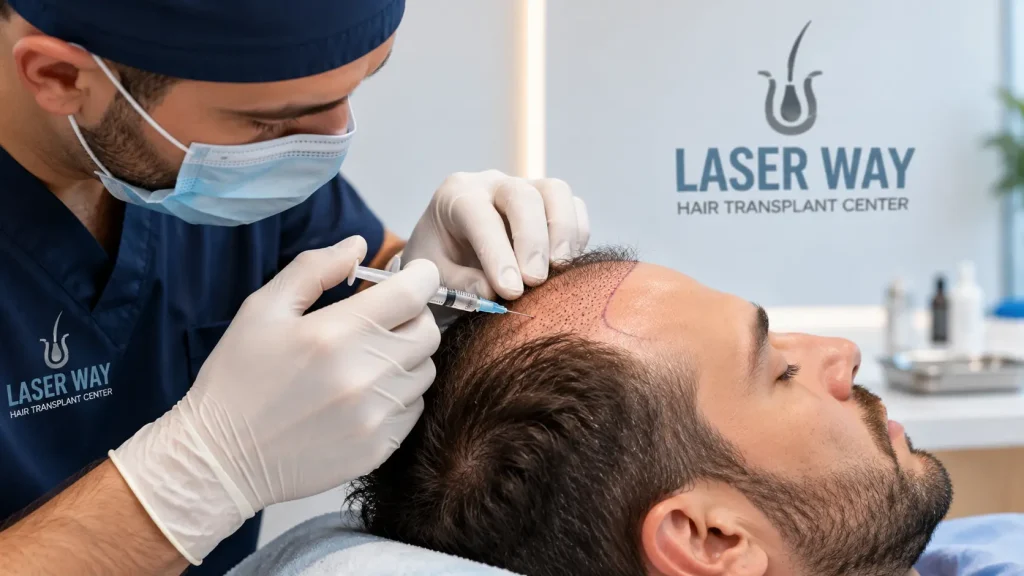
Local anesthesia is usually administered through injections into the scalp.
During the initial injections, patients may feel a brief stinging, burning, or pressure sensation.
The intensity of this discomfort varies between individuals.
Once the donor area is sufficiently numb, follicular extraction can begin according to the selected technique.
3. Numbing the Recipient Area
Before graft implantation, local anesthesia is also administered to the recipient area.
Depending on the treatment plan, this may include the frontal hairline, mid-scalp, or crown.
Additional injections may be required to provide adequate anesthesia throughout the planned treatment area.
4. Monitoring Comfort During Surgery
The medical team monitors the effectiveness of anesthesia during the procedure.
If necessary, additional anesthetic medication may be administered within appropriate safety limits.
Patients should inform the medical team immediately if they experience significant pain or discomfort.
Do Hair Transplant Anesthesia Injections Hurt?
The initial anesthesia injections can cause temporary discomfort.
Some patients describe the sensation as a small sting, while others notice a brief burning feeling or pressure beneath the skin.
The experience depends on individual sensitivity, the injection technique, and the anesthetic medication used.
Once the anesthesia takes effect, follicular extraction and implantation can usually be performed without significant pain.
However, being numb does not necessarily mean feeling absolutely nothing.
Patients may still notice touch, pressure, or movement even when pain sensations are effectively blocked.
What Does a Patient Feel During Hair Transplant Surgery?
Every patient’s experience is different.
Once local anesthesia is working, sensations may include:
- Gentle pressure or touch on the scalp.
- Movement of instruments during the procedure.
- Mild vibrations during follicular extraction.
- Changes in head position.
- Tiredness or discomfort from remaining in one position for an extended period.
These sensations do not automatically indicate that the anesthesia has stopped working.
However, sharp pain or substantial discomfort should always be reported to the medical team.
How Long Does Hair Transplant Anesthesia Last?
The duration of local anesthesia depends on the medication used, the dosage, the treated area, and individual patient factors.
Its effects may last several hours, although they do not necessarily cover the entire procedure without additional administration.
Hair transplantation can take several hours, so the medical team monitors patient comfort and the effectiveness of anesthesia throughout treatment.
After surgery, the numbing sensation gradually wears off.
As normal sensation returns, patients may experience tenderness, tightness, or mild discomfort in the treated areas.
Postoperative symptoms should be managed according to the medical team’s instructions.
Is the Same Anesthesia Used for DHI and Sapphire FUE?
Both DHI and Sapphire FUE hair transplantation are generally performed using local anesthesia.
The main differences between these techniques involve the preparation of the recipient area and the implantation process, rather than the basic need for anesthesia.
Anesthesia During DHI Hair Transplantation
During DHI hair transplantation, extracted grafts are implanted using a specialized implantation instrument.
Local anesthesia helps control pain during both extraction and implantation.
The specific anesthesia plan depends on the patient and the procedure.
Anesthesia During Sapphire FUE
With Sapphire FUE, individual follicular units are extracted from the donor area, while sapphire-tipped instruments are used to create channels in the recipient area.
Local anesthesia is administered during the relevant stages of treatment.
Neither technique can be described as universally painless, and one does not automatically require less anesthesia than the other.
The patient’s experience depends on individual factors and the treatment plan.
Is Hair Transplant Anesthesia Safe?
Local anesthesia is widely used in medical procedures and is generally considered safe when administered by qualified professionals with appropriate assessment and monitoring.
However, no medical procedure is completely free from risk.
Possible effects include:
- Temporary pain or tenderness at injection sites.
- Bruising or swelling.
- Dizziness or lightheadedness.
- Temporary changes in scalp sensation.
Rarely, more serious complications can occur, including allergic reactions or systemic toxicity from local anesthetic medications.
These complications require immediate medical attention.
Before surgery, patients should inform the medical team about:
- Known medication allergies.
- Previous reactions to anesthesia.
- Heart, liver, or other relevant medical conditions.
- Prescription medications.
- Supplements and over-the-counter products.
- Any health conditions that could affect treatment.
Patients should never stop prescribed medications without consulting their healthcare professional.
Can Hair Transplant Anesthesia Be Given Without Needles?
Some clinics use needle-free systems that deliver anesthetic medication into superficial skin layers through pressure.
These systems may reduce discomfort associated with initial needle injections for certain patients.
However, needle-free delivery does not necessarily eliminate the need for conventional injections later in the procedure.
It also should not be assumed to be completely painless or safer in every situation.
Patients interested in this option should confirm whether it is available and medically appropriate at their chosen clinic.
Can Sedation Be Used During a Hair Transplant?
Some medical facilities may offer sedation alongside local anesthesia for selected patients.
Sedation is intended to reduce anxiety and help patients remain more relaxed.
It is different from local anesthesia and requires appropriate medical assessment, monitoring, and safety precautions.
Not every clinic offers sedation, and not every patient requires it.
Patients who experience significant anxiety should discuss their concerns with the medical team before surgery rather than taking sedative medications on their own.
What Happens When the Anesthesia Wears Off?
After the procedure, normal scalp sensation gradually returns.
During the first hours or days, patients may experience:
- Tenderness in the donor area.
- Tightness or discomfort in the scalp.
- Mild swelling.
- Temporary numbness or altered sensation.
- Small scabs in the treated areas.
The intensity and duration of these symptoms vary between individuals.
Patients should follow their clinic’s postoperative instructions, including guidance on medication and scalp care.
Increasing pain, fever, spreading redness, discharge from the treated areas, or other concerning symptoms should be reported promptly to the medical team.
How Should You Prepare for Hair Transplant Anesthesia?
Preparation begins with an appropriate medical consultation.
Patients should discuss any concerns about anesthesia, including fear of needles, previous reactions, or medications they currently use.
It is also important to follow the clinic’s instructions regarding food, drinks, physical activity, and preparation on the day of surgery.
These instructions may differ if sedation or another additional treatment is planned.
If anything is unclear, patients should ask for clarification before their appointment.
Frequently Asked Questions About Hair Transplant Anesthesia
Are you awake during a hair transplant?
Yes. When only local anesthesia is used, patients generally remain awake and can communicate with the medical team. If sedation is also administered, the level of alertness may vary.
Does hair transplant anesthesia hurt?
The initial injections may cause temporary stinging or burning. Once the anesthesia takes effect, pain during the procedure is usually significantly reduced, although pressure and touch may still be felt.
How long does scalp numbness last after a hair transplant?
The effects of local anesthesia may last several hours, depending on the medication and individual factors. Changes in sensation caused by the surgical procedure itself may persist longer.
Can you feel pain during graft implantation?
Local anesthesia is intended to block pain during implantation. If pain occurs, patients should inform the medical team so the effectiveness of the anesthesia can be assessed.
Is general anesthesia necessary for a hair transplant?
Usually not. Most hair transplant procedures are performed using local anesthesia. The need for other anesthesia methods is assessed individually.
Can you have an allergic reaction to local anesthesia?
True allergic reactions to local anesthetics are uncommon but possible. Patients should inform the medical team about any previous reactions to medications or anesthesia.
Can I get a hair transplant if I am afraid of needles?
Fear of needles does not automatically prevent someone from undergoing a hair transplant. Patients should discuss their concerns with the medical team to explore appropriate ways to manage anxiety.
Conclusion: What Should You Know About Hair Transplant Anesthesia?
Local anesthesia plays an essential role in modern hair transplantation by helping control pain during follicular extraction and implantation.
Although the initial injections may cause temporary discomfort, many patients can undergo the procedure while remaining awake and without significant pain during the anesthetized stages.
Individual experiences vary, which is why medical assessment, communication, and monitoring are important throughout the process.
Laser Way Clinic has specialized in hair transplantation since 2004 and offers DHI and Sapphire FUE techniques.
If you are considering a hair transplant and have questions about anesthesia or the procedure, contact Laser Way Clinic to discuss your concerns and arrange a consultation.